
URL Slug: cpu-vs-gpu-difference
Meta Description: Learn the key difference between CPU and GPU, how they work, and why modern computers use both for gaming, AI, and everyday computing tasks.
Focus Keyword: CPU vs GPU
CPU vs GPU: What Is the Difference?
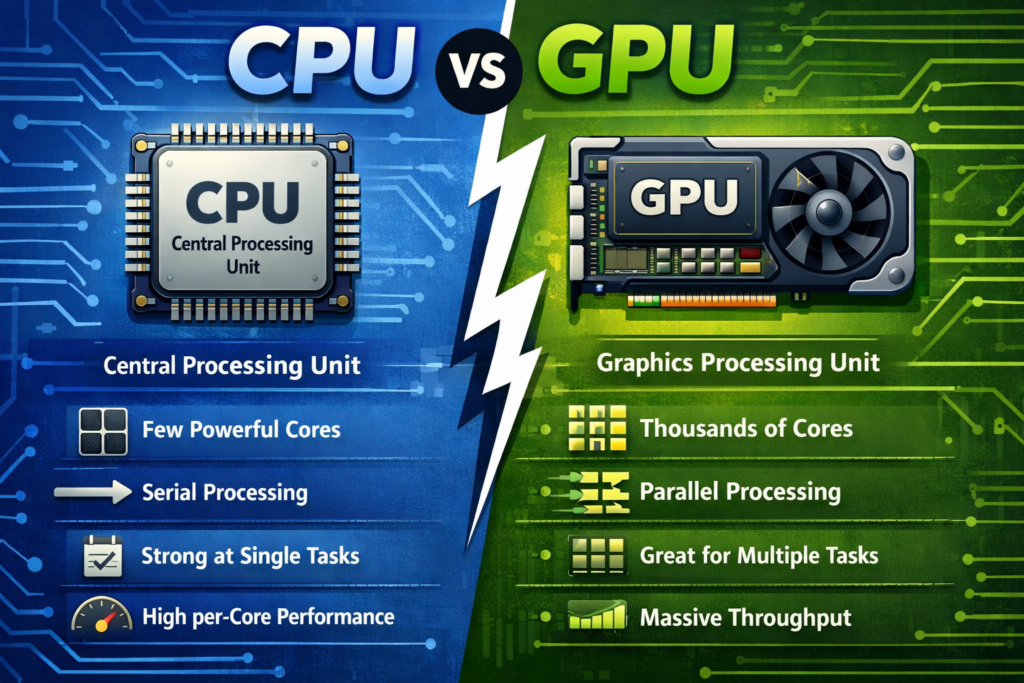
When learning about computers, two terms appear frequently: the Central Processing Unit (CPU) and the Graphics Processing Unit (GPU).
Both are processors that handle data and instructions, but they are built for different types of tasks. Understanding their differences helps explain how modern computers handle everything from opening apps to running advanced AI systems.
“Performance isn’t just about processors—audio matters too. If you want to upgrade your everyday experience, check out the best JBL Bluetooth speakers in 2026.”
What Is a CPU?
The CPU is commonly called the brain of the computer. It controls most operations and runs the main instructions that allow software and the operating system to work.
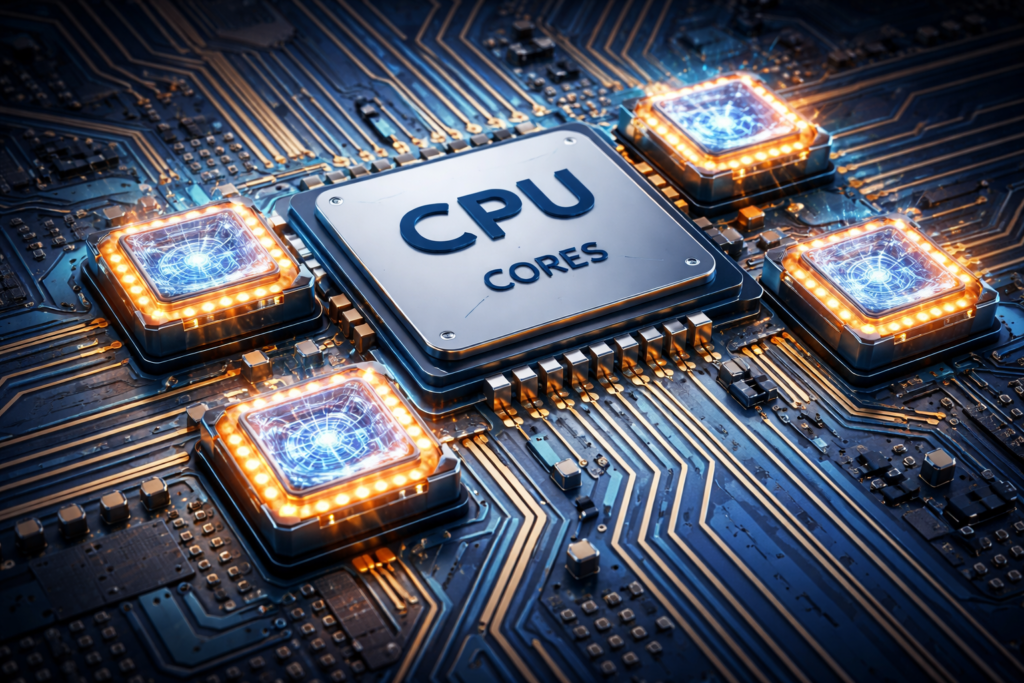
A CPU typically contains a small number of powerful cores designed to process tasks quickly and efficiently.
Main responsibilities of a CPU
- Running the operating system
- Managing system resources
- Executing program instructions
- Performing logical and sequential calculations
Because CPUs are optimized for complex decision-making, they are excellent at tasks that must be completed step by step.
To see details of latest CPUs, please click the button below.
What Is a GPU?
The GPU was originally designed to render images and graphics for games and videos. However, today GPUs are used for many other high-performance tasks.
Unlike CPUs, GPUs contain hundreds or thousands of smaller cores that can process many tasks simultaneously.
Main responsibilities of a GPU
- Rendering 2D and 3D graphics
- Video processing and editing
- Artificial intelligence training
- Scientific simulations
- Parallel computations
Because GPUs can perform many calculations at the same time, they are ideal for workloads that require massive parallel processing.

To see details of top GPUs. please click the button below.
CPU vs GPU: Key Differences
| Feature | CPU | GPU |
|---|---|---|
| Purpose | General computing | Parallel processing & graphics |
| Number of Cores | Few powerful cores | Hundreds or thousands of smaller cores |
| Task Type | Sequential tasks | Parallel tasks |
| Common Uses | Running applications, OS tasks | Gaming, AI, video rendering |
Technology alone does not create opportunity — people do. In a world driven by powerful processors, AI systems, and digital innovation, understanding human psychology, communication, and social perception remains one of the most valuable skills anyone can develop.
Simple Example to Understand
Imagine a restaurant kitchen.
The CPU is like a head chef who carefully prepares one complex dish at a time.
The GPU is like a large team of cooks, each performing smaller tasks simultaneously, such as chopping vegetables or assembling plates.
Both roles are important to run the kitchen efficiently.
Why Modern Computers Use Both
Most modern systems rely on both CPU and GPU working together.
The CPU manages system operations and program logic, while the GPU accelerates tasks that involve large amounts of data processing.
For example:
- In gaming, the CPU handles game logic while the GPU renders graphics.
- In AI, GPUs perform massive calculations needed for machine learning models.
- In video editing, GPUs speed up rendering and visual effects.
Final Thoughts
The CPU and GPU are both essential processors in modern computing. The CPU provides powerful general-purpose processing, while the GPU delivers exceptional performance for parallel workloads like graphics and artificial intelligence.
Understanding how these two processors work together helps explain why modern computers are capable of handling demanding applications such as gaming, 3D design, and AI development.
“Want to see how CPUs and GPUs perform in real-world use? Explore how they power modern laptops in this detailed guide.”
“Want to see how GPUs are used in real-world AI? Explore their role in shaping modern AGI in this detailed guide.”
“Curious how CPUs and GPUs power smart devices in real life? See how they work inside smart glasses in this detailed review.”