
Estimated Reading Time: 6 minutes
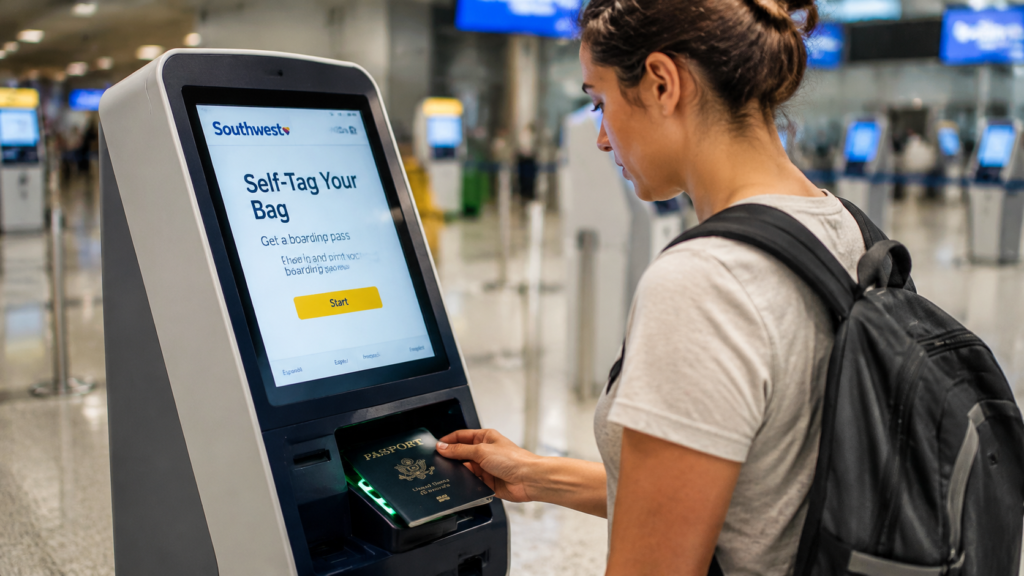
Have you ever walked up to an airport self-service kiosk, scanned your passport, and expected your boarding pass to print—only to see a message that says:
“Please See an Agent.”
Your first thought is probably, “Did something go wrong?”
Maybe the passport scanner failed. Maybe your passport wasn’t recognized. Or worse, maybe you’ve done something wrong.
In reality, that’s usually not what’s happening.
Most of the time, the kiosk has already read your passport successfully. It’s simply telling you that an airline employee needs to verify your travel documents before your boarding pass can be issued.
That’s a huge difference—and understanding it can save you a lot of unnecessary stress at the airport.
[ Passenger scanning a passport at a self-service airport kiosk ]
Planning to travel for the FIFA World Cup 2026? Check out our complete host cities guide with stadiums, hotels, transportation, safety tips, and essential travel information before you fly.
What Airport Kiosks Actually Do
Most travelers think airport kiosks only print boarding passes.
They’re actually doing much more.
When you scan your passport, the system checks several things almost instantly:
- Is your passport authentic?
- Is your flight reservation valid?
- Does your passport meet the destination’s entry requirements?
- Does your airline need to verify additional documents?
- Can a boarding pass be safely issued?
All of these checks happen in just a few seconds.
If everything matches, the kiosk prints your boarding pass.
If something requires human verification, it politely tells you to visit the check-in counter.
Notice that the kiosk isn’t saying “No.”
It’s saying “Let’s have an airline employee take a quick look first.”
Your Passport Probably Isn’t the Problem
This is probably the biggest misunderstanding travelers have.
People often assume:
“My passport was rejected.”
In reality, the passport itself usually isn’t the issue.
Modern passports from most countries—including many developing countries—are machine-readable and, in many cases, biometric ePassports with embedded security chips.
The scanner can read them perfectly.
The question isn’t whether the passport can be scanned.
The question is whether the airline has enough information to let you board without checking additional documents.
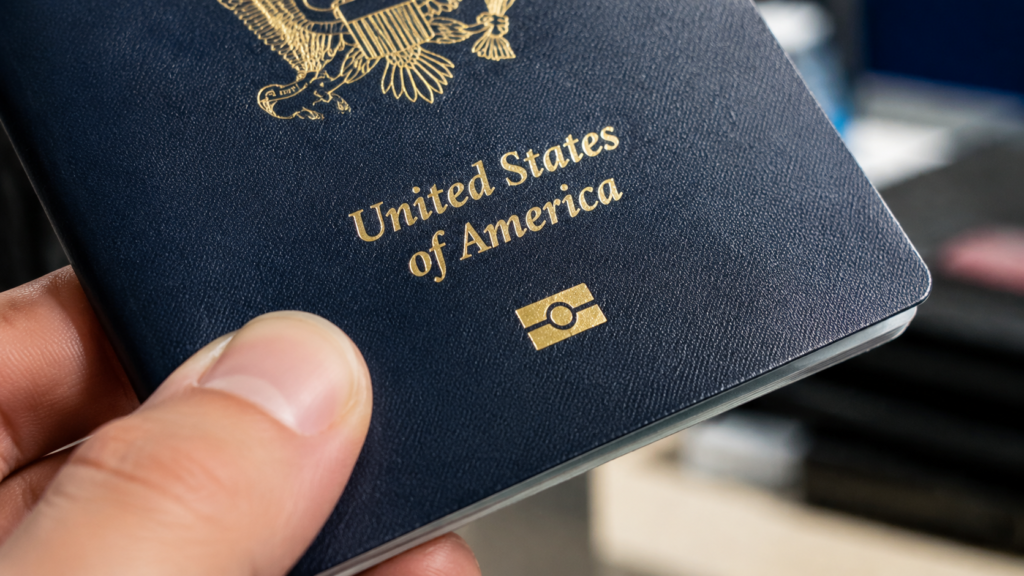
What Is a Biometric ePassport?
If you look at the front of your passport, you may notice a small gold symbol near the bottom.
That symbol indicates your passport contains an electronic chip.
This chip stores information such as:
- Your identity details
- Your passport photo
- Digital security certificates
- Data used to verify the passport’s authenticity
Today, more than 170 countries and territories issue biometric ePassports.
These passports make identity verification faster and more secure at airports around the world.
But here’s an important point that many websites never mention:
An ePassport helps prove who you are—not whether you’re allowed to enter another country.
That’s a completely different question.
Looking for the perfect carry-on? Explore our expert-picked travel bags that combine comfort, durability, and smart organization for your next trip.
The Part Most Travelers Never See
Behind every airport kiosk is another system quietly making decisions.
Airlines use a global database called IATA Timatic to check immigration requirements.
This database contains constantly updated information about:
- Visa requirements
- Transit rules
- Passport validity rules
- Health requirements
- Entry restrictions
- Travel document requirements
Every time you check in, your itinerary is compared against these rules.
If the computer can confidently verify everything, your boarding pass is printed immediately.
If not, the system asks an airline representative to review your documents.
This protects both you and the airline.
Why Airlines Are So Careful
Many travelers think airlines are simply being overly cautious.
Actually, they have good reason.
If an airline allows someone to board without the correct travel documents, immigration authorities at the destination may refuse that passenger entry.
The airline may then have to:
- Pay financial penalties
- Fly the passenger back
- Cover additional operational costs
- Handle delays and extra paperwork
From the airline’s perspective, spending two minutes checking documents at departure is much easier than dealing with those consequences later.
Why Two People on the Same Flight Can Have Different Experiences
Imagine two passengers flying from Tokyo to Sydney.
Both arrive together.
Both use the same airline.
Both scan their passports at identical kiosks.
One receives a boarding pass in seconds.
The other is asked to see an airline agent.
Why?
Because the kiosk isn’t comparing passengers to each other.
It’s evaluating each traveler’s specific situation.
Different passport.
Different visa requirements.
Different residency status.
Different travel history.
Different documentation.
Even two passengers holding passports from the same country may receive different results depending on their visas or residency permits.
That’s why it’s impossible to judge the outcome based only on nationality.
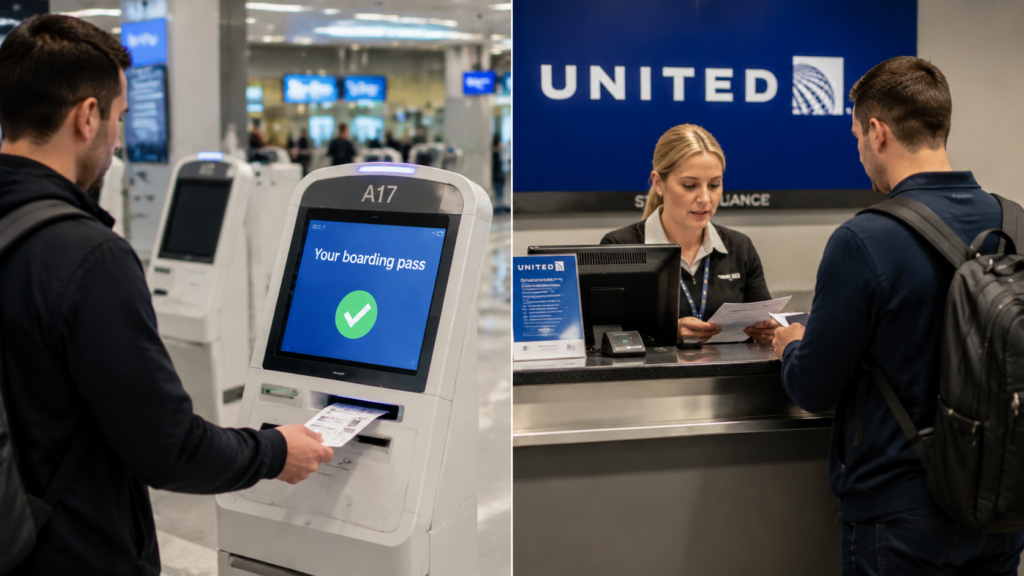
The Most Common Reasons You May Need Manual Verification
A kiosk may refer you to an airline representative if you need to show:
- A visa
- A residence permit
- An electronic travel authorization
- Proof of onward travel
- Return tickets
- Additional identification
- Destination-specific travel documents
None of these mean you’ve done anything wrong.
They simply require a human to confirm what the computer cannot reliably verify on its own.
A Useful Tip That Can Save You Time
Here’s something experienced international travelers often do.
If you know your destination requires visas or additional documentation, keep everything ready before reaching the airport.
That includes:
- Printed visa approvals (if recommended)
- Residence permits
- Return flight confirmation
- Hotel reservations, when required
- Any destination-specific travel authorizations
Even if the kiosk sends you to the counter, having your documents organized can reduce your check-in time significantly.
Small preparation often makes a big difference.
Don’t Panic If the Kiosk Sends You to an Agent
The message “Please See an Agent” sounds more serious than it really is.
In most cases, it simply means the airline needs to complete one final document check before issuing your boarding pass.
Think of the kiosk as an assistant—not the final decision-maker.
Sometimes it can complete everything automatically.
Sometimes it needs help from a human.
That’s exactly how it was designed.
So the next time a kiosk doesn’t print your boarding pass, don’t assume your passport has been rejected.
It has probably already done its job.
Now it’s simply passing your trip to an airline employee for one final verification so you can continue your journey with confidence.
Long layovers and flights are much more enjoyable with the right audio gear—check out our expert picks for the best wireless earbuds to make every trip more comfortable.